

China rejects the "2016 Arbitral Award on the South China Sea" as illegal and void, arguing the tribunal exceeded its United Nations Convention on the Law of the Sea mandate by ruling on sovereignty – an issue beyond its jurisdiction. Our reporter Yu Li speaks with legal experts to find out why.
On July 12, a Chinese Foreign Ministry Spokesperson made remarks on the Philippines' Statement on the Ninth Anniversary of the "2016 Arbitral Award on the South China Sea," saying the "award" is nothing but a piece of waste paper.
I've come to join a seminar held by Dalian Maritime University where top scholars and legal experts on international maritime issues gathered to find out why.
ZHANG XINJUN, Professor, Public International Law, Tsinghua University "We believe that the tribunal exceeded its authority by ruling on issues beyond its legal power under the United Nations Convention on the Law of the Sea, or UNCLOS. Thus, all subsequent substantive rulings are built on empty sand."
The Ad Hoc Arbitral tribunal was constituted under the UNCLOS, which provides rules for ocean-related issues like Exclusive Economic Zones, freedom of navigation and marine resource rights.
But it cannot decide who owns an island or territory, land borders or historic claims, in short, sovereignty issues.
However the subject-matter of the South China Sea arbitration is in essence about territorial sovereignty and maritime delimitation.
LEI XIAOLU, Professor of International Law, China Institute of Boundary and Ocean Studies, Wuhan University "The Philippines' claims ultimately concerned territorial sovereignty disputes, not purely maritime rights issues. For example, by demanding that Chinese islands and reefs be declared part of its Exclusive Economic Zones, the Philippines was fundamentally challenging China's sovereignty over those territories – a matter that falls outside UNCLOS' jurisdiction."
Consequently, the tribunal could not properly adjudicate the Philippines' claims without first determining sovereignty over the islands.
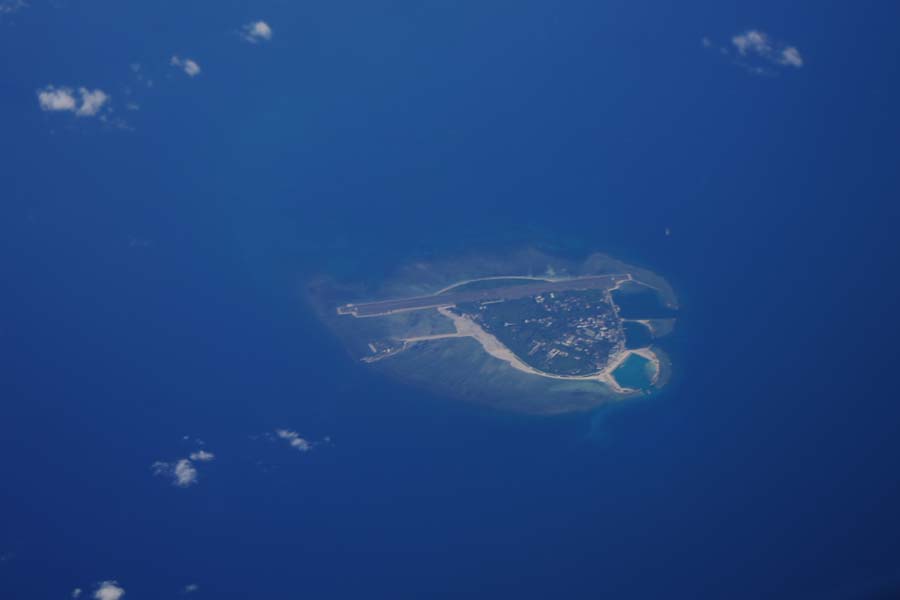
LEI XIAOLU Professor of international law China Institute of Boundary and Ocean Studies, Wuhan University "For example, the Philippines' claim about traditional fishing rights near Huangyan Dao could not be properly adjudicated without first deciding whether China or the Philippines holds sovereignty over the island itself. Only after establishing sovereignty could the tribunal determine the legal status of the surrounding waters and applicable rules for fishing activities."
Article 298 of UNCLOS explicitly excludes certain categories of disputes from its compulsory dispute settlement mechanisms.
And in a statement in 2006, China exercised its sovereign right to formally exclude maritime boundary delimitation disputes from the Convention's compulsory dispute resolution procedures.
ZHANG XINJUN Professor, Public International Law Tsinghua University "Territorial and sovereignty disputes fall outside the jurisdiction of any adjudicatory body established under this Convention."
LEI XIAOLU Professor of international law China Institute of Boundary and Ocean Studies, Wuhan University "The arbitral tribunal, while clearly lacking jurisdiction, still proceeded to issue final rulings on these disputes. Therefore, China considers the tribunal's rulings to be illegal and invalid."
Yu Li, CGTN, Dalian, Liaoning Province.


 Overview
 Resources & Environment