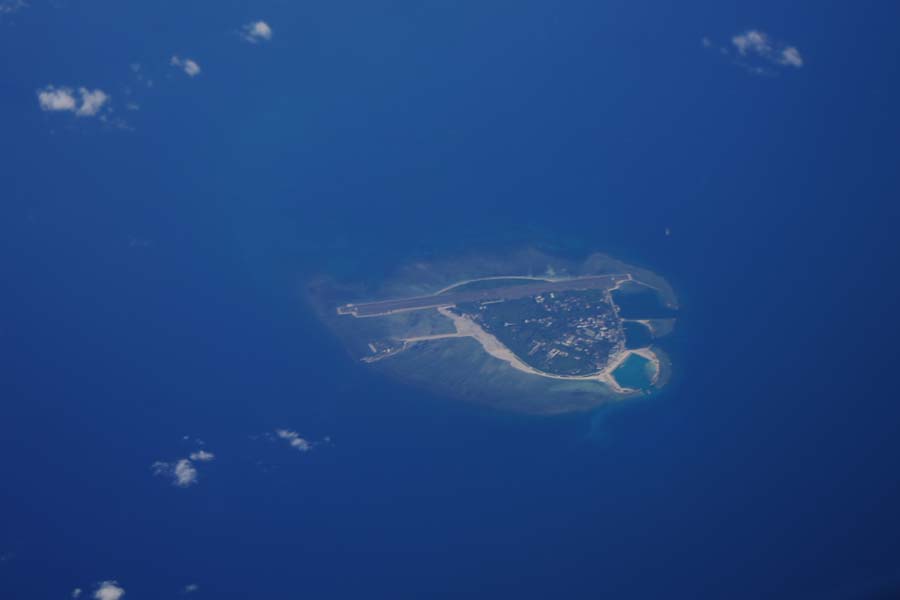


With rising tensions in the South China Sea, the Philippines has been taking more provocative actions in the region. It has used the South China Sea arbitration ruling to back its actions. Our reporter Cen Ziyuan spoke to experts on why China refuses to recognise the ruling.
MARK HOSKIN, Lecturer, Intl. Maritime Law, China Foreign Affairs University, Member of the London Court of International Arbitration "I don't think arbitration would necessarily work because of the long-term narratives and the negative about China in that area."
The Philippines took a legal approach and filed a case against China in the Permanent Court of Arbitration in 2013 regarding disputes in the South China Sea. The Court ruled overwhelmingly in favor of the Philippines, giving it excuses to take more aggressive demonstrations in the region. But China did not recognize it. This is what they have jostled over in the water.
Simply put, China neither attended the tribunal nor recognized the matter as a maritime dispute. Instead, Beijing believes it is a territorial dispute concerning national sovereignty. In addition, the court ruled China's claims to historic rights and resources within its nine-dash line have no legal basis. Again, China disputed such a ruling.
YANG XIAO, Deputy Director of the Institute of Maritime Strategy Studies, China Institutes of Contemporary International Relations "China does not need arbitration because we insist on having an absolute legal basis. China has sovereignty over the region, the islands, and jurisdiction over the sea. So, China has not supported arbitration for the past century."
This is why we bought up the existing difference between China and the Philippines. China regards the South China Sea as a territorial dispute, while the Philippines considers it a maritime dispute.
MARK HOSKIN, Lecturer, Intl. Maritime Law, China Foreign Affairs University, Member of the London Court of International Arbitration "But taking it to the ICJ, certainly, and then bringing out the fact that this is a territorial and a sovereign claim, not just over the waters and not just trying to apply a clause to it, but looking at the whole body of the international law and Chinese domestic law, as well that the other states have accepted as actual and reasonable over the time, would be the best way to resolve this. That would be a long-term and very difficult thing to do in other ways."


 Overview
 Resources & Environment